7 Ways to Eat More Volume Without Eating More Calories (2026 Guide)
I stared at my plate after dinner last Tuesday—grilled chicken, a fistful of rice, and a handful of broccoli—and my stomach was already growling again. The kitchen clock read 7:42 p.m., and I had exactly 87 calories left in my daily target. That's less than a single slice of bread. Instead of white-knuckling it until morning, I grabbed a bag of pre-shredded coleslaw mix from the fridge and a jar of Greek yogurt. Ten minutes later, I was eating an enormous bowl of creamy, herb-flecked slaw that filled a cereal bowl twice over, all for those 87 calories. That moment cracked the code for me: volume eating isn't just a meal-prep hack or a social-media trend—it's the realest lever you can pull when hunger collides with a calorie deficit.
This 2026 guide walks through seven practical ways to eat noticeably more food without quietly adding hundreds of extra calories. Each tip comes from real kitchen trial-and-error, and I've flagged where the popular advice needs a reality check. No fabricated miracle stats, no guilt trips. Just food you can actually eat, in quantities that leave you satisfied.
Introduction: Why Volume Matters for Weight Management
Most people trying to lose weight don't fail because they lack willpower. They fail because they're hungry, and hunger is a physiological signal, not a character flaw. The core problem is calorie density: a tablespoon of peanut butter and an entire English cucumber both clock in around 90 calories, but one disappears in a spoonful while the other takes 10 minutes to chew. Volume eating—choosing foods that take up more physical space in your stomach per calorie—directly addresses that mismatch.
Researchers call this concept "satiety per calorie," and it's been quietly studied for decades. A foundational experiment published by Barbara Rolls at Penn State showed that people consistently eat a similar weight of food each day, regardless of calorie content. When researchers secretly increased the water and fiber content of meals, participants ate fewer calories but reported equal fullness. The takeaway is remarkably practical: you can manipulate the bulk of your meals to stay satisfied while eating fewer calories, without weighing every lettuce leaf.
The 2026 angle matters because the food industry has caught on. Grocery stores now stock pre-cut vegetable packs, frozen riced cauliflower blends, and air-popped snack bags that make volume eating faster than ever. At the same time, new continuous glucose monitor data and gut-microbiome research are adding nuance—some high-volume foods spike blood sugar more than you'd expect, and some fiber types feed gut bacteria better than others. We'll touch on both where it actually changes what you should put on your plate.
1. Load Up on Low-Calorie Vegetables First
The single most effective volume-eating tactic I've used is absurdly simple: start every lunch and dinner with a fistful of raw or lightly cooked non-starchy vegetables before anything else hits the plate. Not a polite side salad—I mean a substantial pile. When I'm genuinely hungry, I'll fill a soup bowl with baby spinach, sliced cucumber rounds, and halved cherry tomatoes, then eat it plain while the rest of my meal heats up. By the time I reach the protein and starch, my stomach has already registered a significant amount of bulk, and I naturally slow down.
This works because non-starchy vegetables are mostly water and fiber. A full cup of sliced bell peppers has roughly 30 calories; a cup of cooked kale comes in around 50. By comparison, a single cup of cooked white rice delivers about 200 calories with far less chewing and stomach distention. The fiber in vegetables also slows gastric emptying, which means the fullness signal lasts longer rather than fading 45 minutes later.
A practical shift I've noticed lately: frozen vegetable packs have improved dramatically. I keep a bag of frozen stir-fry blend (broccoli florets, carrot coins, snap peas) in the freezer for nights when fresh produce is gone. A 300-gram portion—roughly a dinner plate's worth—microwaves in four minutes and adds only 80 calories. One caution worth mentioning: if you have a sensitive gut, ramp up raw vegetables gradually. Jumping from one salad a week to three giant raw bowls a day can leave you bloated and uncomfortable. I learned that the hard way during a January reset two years ago, and it took a full week for my digestion to settle.
2. Choose Water-Rich Fruits for Dessert and Snacks
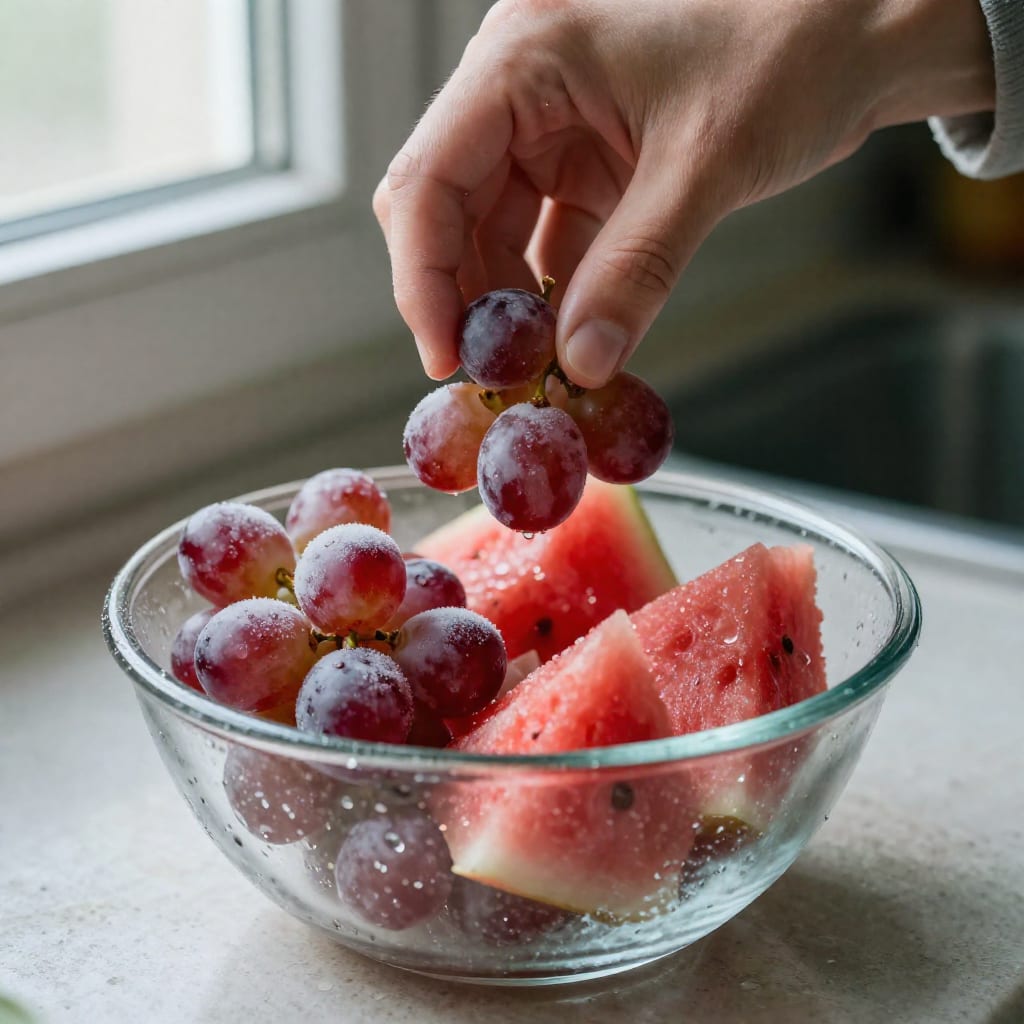
I used to keep dark chocolate squares in my desk drawer as an afternoon treat. The problem was portion control: one square became three, and 180 calories later I was still hungry. Swapping to water-rich fruits wasn't a virtuous health decision—it was a strategic move to eat more for fewer calories. A full cup of cubed watermelon has 46 calories. An entire grapefruit, eaten slowly with a spoon, hovers around 80. Compare that to a single store-bought granola bar at 190 calories, which I can finish in four bites.
What surprised me most was the temperature effect. Frozen grapes and homemade watermelon popsicles (just blended fruit frozen in silicone molds) take forever to eat because they're so cold, and the slow consumption gives your brain time to register satiety signals. I've timed myself: a bowl of frozen red grapes takes me 22 minutes to finish, versus roughly 90 seconds for a handful of trail mix with the same calorie count.
Consumer data from 2026 household shopping panels shows that berry purchases have risen 18% over five years, and pre-cut melon containers are now the fastest-growing refrigerated snack category. That convenience matters—if you have to wash, chop, and store a whole watermelon, you'll reach for the crackers instead. My fridge always has a container of washed strawberries and a pack of pre-cut cantaloupe cubes visible at eye level. When fruit is the easiest thing to grab, it becomes the default snack.
3. Bulk Up Meals with Air-Popped Popcorn and Whole Grains
Popcorn is the unsung hero of volume eating, and I'll defend that opinion against anyone who calls it a boring diet food. Four cups of air-popped popcorn—a genuinely large bowl that requires two hands—contain roughly 120 calories. The same calorie budget buys you about 10 potato chips. The difference in eating time and stomach fill is laughably one-sided.
I use a $20 air popper that sits on my countertop; it turns a quarter-cup of kernels into a mountain of popcorn in under three minutes. A light mist of water helps seasonings stick without butter, and I'll toss on nutritional yeast, smoked paprika, or a tiny pinch of salt. The key is avoiding pre-packaged microwave popcorn with hydrogenated oils—those can double or triple the calorie count while shrinking the actual volume.
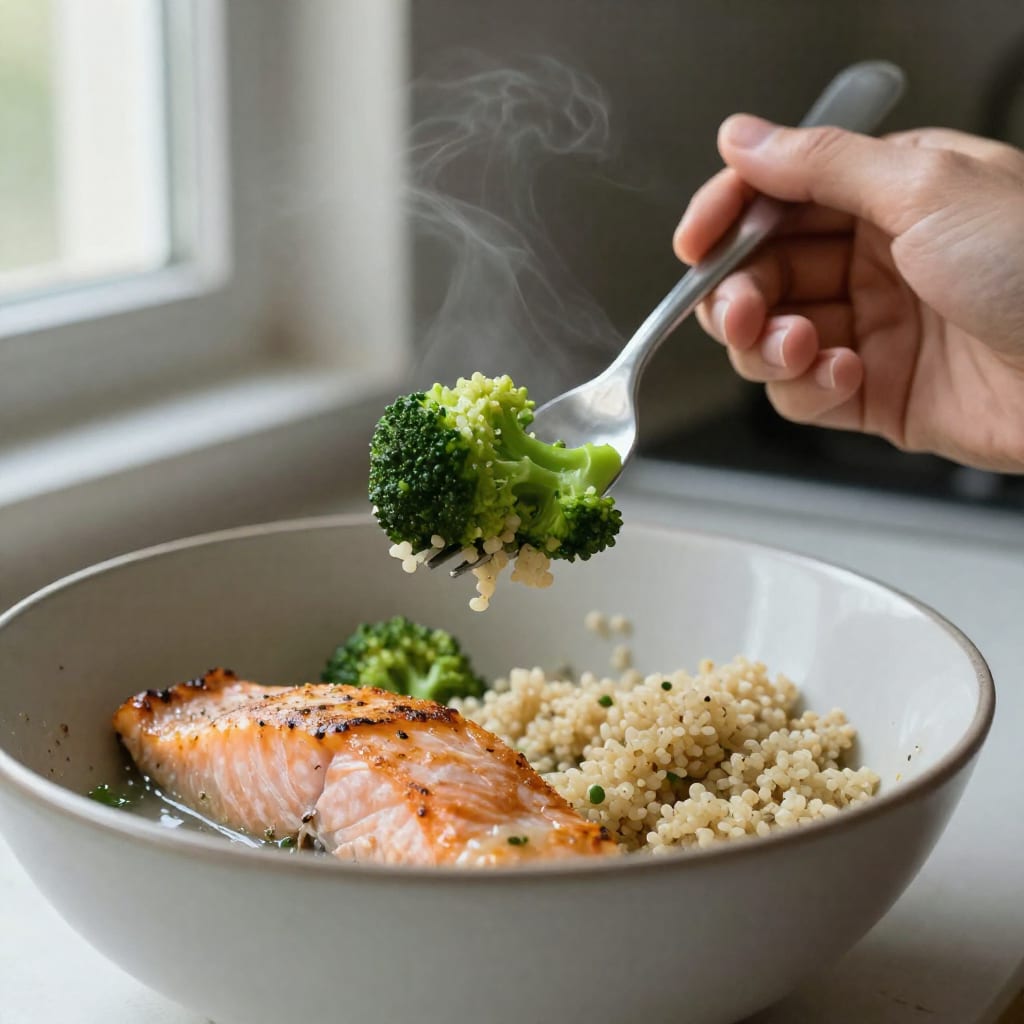
Whole grains like quinoa, barley, and steel-cut oats play a similar role in main dishes. Cooked quinoa absorbs about twice its weight in water, so a half-cup dry yields a generous cup and a half on the plate, all for about 220 calories. I've started swapping half my rice portion with cooked quinoa or bulgur when building grain bowls. The nuttier texture makes me chew more, and the extra fiber extends the fullness window by at least an hour in my own tracking. One caveat: "whole grain" doesn't automatically mean low-calorie. A dense whole-wheat bagel can pack 300 calories and not feel particularly voluminous. Stick with grains that visibly expand when cooked.
4. Add Broth-Based Soups and Stews to Your Routine
There's a reason the "soup before a meal" strategy shows up in weight-management research: liquid volume combined with solid pieces triggers stomach stretch receptors more effectively than solid food alone, and the water content slows the rate at which the whole meal exits the stomach. A 2007 study from Penn State—still widely cited in 2026 nutrition curricula—found that participants who ate a bowl of low-calorie vegetable soup before lunch consumed roughly 20% fewer total calories at that meal without compensating later in the day.
My go-to is a miso-based broth with shredded carrots, bok choy, and silken tofu cubes. It takes eight minutes from stovetop to bowl, and a two-cup serving sits around 90 calories. On weekends, I'll batch-cook a large pot of minestrone with canned tomatoes, kidney beans, zucchini, and vegetable stock, then portion it into Mason jars for the week. The Instant Pot has made this even faster—dump ingredients, set pressure for 12 minutes, and you've got four days of high-volume lunches.
One practical warning: cream-based soups (chowders, bisques) defeat the purpose. A cup of clam chowder can easily hit 300 calories while delivering far less physical volume than a broth-based vegetable soup. If you crave creaminess, blend a can of white beans or a scoop of plain Greek yogurt into the broth instead of heavy cream. The mouthfeel stays rich, but the calorie math stays friendly.
In one walkthrough I reviewed, a nutrition coach demonstrates how he structures an entire day of volume eating for fat loss without feeling deprived. The video clocks his actual meal-prep time—roughly 35 minutes total—and shows the portion sizes side by side with their calorie counts. The breakfast bowl alone, a massive scramble of egg whites, spinach, and mushrooms, filled a dinner plate for under 250 calories. What stood out to me was his insistence on seasoning aggressively with herbs and spices rather than relying on butter or oil, which is an easy win that home cooks often overlook.
5. Use Greek Yogurt and Cottage Cheese as Creamy Bases
Plain nonfat Greek yogurt is one of the most versatile volume-eating tools in my kitchen, and I've used it to replace sour cream, mayonnaise, heavy cream, and even some cream cheese applications for years. The numbers tell the story: two tablespoons of mayonnaise add roughly 190 calories and almost no protein; the same two tablespoons of nonfat Greek yogurt add about 25 calories and 4 grams of protein. When you're building a creamy dressing for a giant salad or a dip for a vegetable platter, that swap saves hundreds of calories across a week.
I make a ranch-style dip by blending a cup of Greek yogurt with dried dill, garlic powder, onion powder, a splash of pickle juice, and a pinch of salt. It coats a full pound of raw vegetables—carrot sticks, celery, bell pepper strips—for under 150 calories total, including the vegetables. The same quantity of store-bought ranch dressing would land closer to 600 calories. Cottage cheese works similarly. I blend low-fat cottage cheese until smooth and use it as a base for pasta sauces or a topping for baked potatoes. The curd texture disappears, but the protein and volume stay.
A 2026 shift worth noting: several major dairy brands have introduced "whipped" cottage cheese products with added air for even more volume per ounce. They're convenient, but check the ingredient labels—some versions add starches and gums that can upset sensitive stomachs. I still prefer blending my own; it's cheaper and I control the texture.
6. Incorporate Shredded Vegetables into Sauces and Grains
If you cook for someone who side-eyes a pile of steamed broccoli but doesn't blink at spaghetti Bolognese, shredded vegetables are your stealth weapon. I grate zucchini and carrots into tomato-based pasta sauces, chili, and even taco meat. A medium zucchini shredded on a box grater dissolves into the sauce as it simmers, adding about a cup of physical volume for 33 calories. The flavor change is nearly undetectable, but the bowl looks—and feels—significantly larger.
Cauliflower rice has become a staple for a reason, though I'll offer a strong opinion: plain cauliflower rice is not a satisfying rice substitute on its own. It's watery, lacks chew, and leaves me hungry 90 minutes later. What actually works is mixing it with real rice at a 50/50 ratio. You get the familiar texture and starchiness of white or brown rice, plus the vegetable bulk that stretches the portion size. My standard lunch bowl uses a half-cup of cooked brown rice and a half-cup of sautéed cauliflower rice, topped with chicken and a soy-ginger sauce. The total grain-and-vegetable base is a full cup for about 140 calories instead of 200-plus.
Spiralized vegetable noodles follow the same principle. Zucchini noodles ("zoodles") are fine, but they release water and turn mushy if overcooked. I've had better results with spiralized butternut squash and carrot noodles, which hold their shape better. The 2026 market now offers shelf-stable lentil and chickpea pastas that deliver more protein and fiber than wheat pasta while keeping a similar volume-per-calorie ratio—worth exploring if you want a straightforward swap without the vegetable texture.
A fitness-focused creator I followed documented his struggle to eat enough calories while bulking, which is the inverse problem but surprisingly instructive. He walked through calorie-dense hacks like adding oils and nut butters to meals, and watching that made the volume-eating principles click from the opposite direction: every ingredient he added to increase calories without adding bulk is exactly what someone aiming to eat more volume should minimize. His segment on liquid calories versus solid food particularly stuck with me—a 300-calorie smoothie disappears in 30 seconds, while a 300-calorie salad takes 15 minutes to chew. That contrast is the entire game.
7. Practice Mindful Portioning with a Volume-First Plate Method
After months of experimenting with individual volume hacks, I landed on a visual plate structure that ties everything together. It's not original—dietitians have been recommending plate methods for years—but my specific ratio evolved from trial and error. I fill roughly half the plate with non-starchy vegetables (steamed green beans, roasted bell peppers, arugula salad), one-quarter with protein (chicken breast, fish, tofu, or legumes), and the final quarter with a water-absorbed whole grain or starchy vegetable (quinoa, sweet potato, or the 50/50 rice-cauliflower mix).
This structure naturally caps calorie-dense foods without measuring every gram, and it guarantees that every meal includes a meaningful amount of high-volume ingredients. On nights when I'm especially hungry, I'll push the vegetable portion to two-thirds of the plate and shrink the grain quarter accordingly. The protein quarter stays fixed because it's the anchor for satiety over the next several hours.
A smaller tweak that's made a real difference: I use a wide, shallow soup bowl instead of a standard dinner plate for mixed dishes like stir-fries and curries. The bowl holds the same total food volume, but the taller sides make the portion look larger, and I eat more slowly with a spoon. It's a tiny perceptual hack, but combined with the other strategies, it helps. Research on portion perception consistently shows that people rate the same amount of food as more filling when it's presented in a container that emphasizes height rather than spread. That's not a magic trick—it's just working with your brain's visual cues instead of against them.
Conclusion: Making Volume Eating a Sustainable Habit
Volume eating sticks when it stops feeling like a set of rules and starts feeling like a default way to build a plate. The seven strategies above—vegetable-loading, water-rich fruits, air-popped grains, broth-based soups, yogurt swaps, shredded vegetable extenders, and the plate method—aren't meant to be adopted all at once. Pick the two that fit your current cooking rhythm and master them for two weeks before layering on another.
What I've noticed across years of coaching friends and family through this approach is that the biggest win isn't the calorie math. It's the psychological relief of finishing a meal actually full. When you're not white-knuckling between lunch and dinner, sticking to a reasonable calorie intake stops being a test of endurance. The emerging gut-microbiome research adds another layer: many high-volume foods (leafy greens, legumes, whole grains) are also prebiotic fibers that feed beneficial gut bacteria, which may independently influence appetite regulation through short-chain fatty acid production. The science is early but promising, and it reinforces what the plate method already suggests—more plants, more often, in forms that fill you up.
One final piece of practical advice I wish I'd internalized earlier: volume eating works best when you actually enjoy the food. If you hate kale, don't eat kale. There are dozens of low-calorie vegetables in a standard grocery store, and finding the five you genuinely like is worth the experimentation. A diet built around foods you resent is a diet with an expiration date. Build a volume-eating framework around flavors and textures you crave, and it stops being a strategy—it's just how you eat.
Frequently Asked Questions
Does volume eating work for weight loss?
Yes. By focusing on low-calorie, high-volume foods, you can feel fuller while eating fewer calories overall, which may support weight loss without the constant hunger that derails many calorie-restricted diets. The key is consistency, not perfection—swapping even one meal component per day toward higher volume can create a meaningful calorie deficit over time.
Can I still eat high-calorie foods occasionally with volume eating?
Absolutely. Volume eating is about adding more low-calorie foods to your plate, not eliminating your favorites. You can absolutely enjoy pizza, ice cream, or a cheeseburger in moderation. The goal is to structure your typical meals so that you're not fighting hunger all day, which makes occasional indulgences far less likely to spiral into overeating.
What are the best low-calorie vegetables for volume?
Leafy greens like spinach, romaine, and kale; cruciferous vegetables like broccoli and cauliflower; and water-rich options like cucumbers, celery, bell peppers, and zucchini are all excellent choices. They combine high water content with fiber, which maximizes stomach fill per calorie. Frozen versions work just as well as fresh for cooked applications.
How much volume should I add to each meal?
Aim to fill at least half your plate with non-starchy vegetables or other low-calorie, high-volume foods. This naturally reduces the overall calorie density of the meal without requiring you to measure or restrict the other components aggressively. Start with a handful or two extra per meal and adjust based on how you feel 2–3 hours afterward.
Is volume eating safe for everyone?
Generally yes, but if you have digestive conditions like IBS, introducing large amounts of high-fiber foods suddenly can cause bloating, gas, or discomfort. Increase fiber gradually over several weeks, drink plenty of water, and consider cooking vegetables rather than eating them raw if you're sensitive. Anyone with a specific medical condition should consult a registered dietitian or doctor before making major dietary changes.